

2026-06-03
The following five questions reflect recent English-language Q&A themes seen around aluminum cap stock. They focus on practical concerns from new purchasers of aluminium sheet and coil for PP caps, ROPP caps, screw caps, and printed closures.
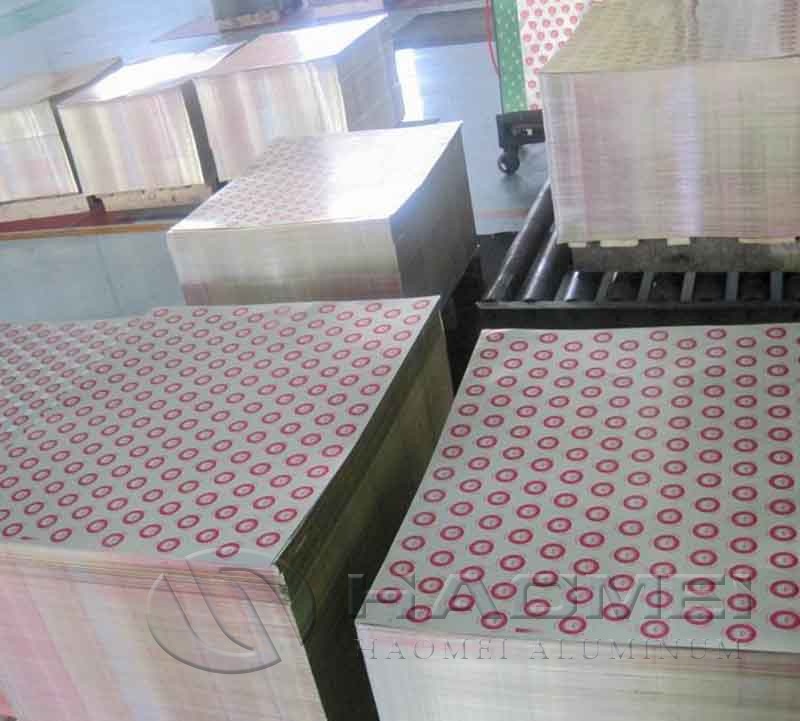
Not exactly. Coloured aluminium sheet usually means aluminium sheet or coil with a solid color coating, such as white, gold, black, red, blue, or silver. Printed aluminium adds logos, text, patterns, tax marks, QR areas, or brand decoration on top of the base coating. For bottle caps, both are usually protected by a clear varnish or lacquer layer so the surface can resist forming, knurling, rolling, and transport abrasion.
For cap manufacturing, the appearance is only one part of the decision. A sheet that looks good in flat form may fail after deep drawing or pilfer-proof forming if the coating lacks flexibility. When brand decoration is required before cap forming, Printed Aluminum is often selected because it can reduce secondary printing steps and improve color consistency across batches.
| Item to confirm | Common requirement | Why it matters |
|---|---|---|
| Base metal | 8011, 3105, 3003, or other cap-grade alloy | Controls strength, elongation, and forming behavior |
| Temper | H14, H16, H18, or soft temper depending on cap type | Affects cracking risk and skirt forming |
| Surface | Coloured, printed, lacquered, or embossed | Determines appearance and process route |
| Coating adhesion | T-bend, cupping, or tape test after forming | Helps prevent peeling around the cap edge |
| Food-contact status | Suitable coating and ink system | Important for closures used on beverages, spirits, oils, and medicines |
There is no single alloy for every closure. The better choice depends on the cap height, diameter, perforation style, closure torque, and whether the cap needs side-wall printing or top printing.
8011 is widely used for many PP and ROPP closures because it balances formability and strength. 3105 is often chosen when slightly better drawing behavior and surface quality are desired. 3003 may be used for certain closures that need stable mechanical properties. For higher strength requirements, the supplier may recommend a different alloy, but it should be proven on the actual cap line before mass ordering.
| Cap application | Typical alloy and temper range | Practical note |
|---|---|---|
| Wine and spirits ROPP caps | 8011-H14, 8011-H16, 3105-H14 | Needs clean rolling, knurling, and bridge forming |
| Beverage PP caps | 8011-H14, 8011-H16, 3003-H14 | Requires stable earing and good coating flexibility |
| Pharmaceutical flip-off caps | 8011-H14, 8011-H16 | Surface cleanliness and lacquer safety are highly important |
| Deep-drawn decorative caps | 3105 or softer forming grades | Better for taller caps and more demanding shapes |
The safest approach is to share the cap drawing, cap diameter, height, bridge design, and line speed with the mill or converter. A sample coil trial is more useful than choosing only by alloy name.
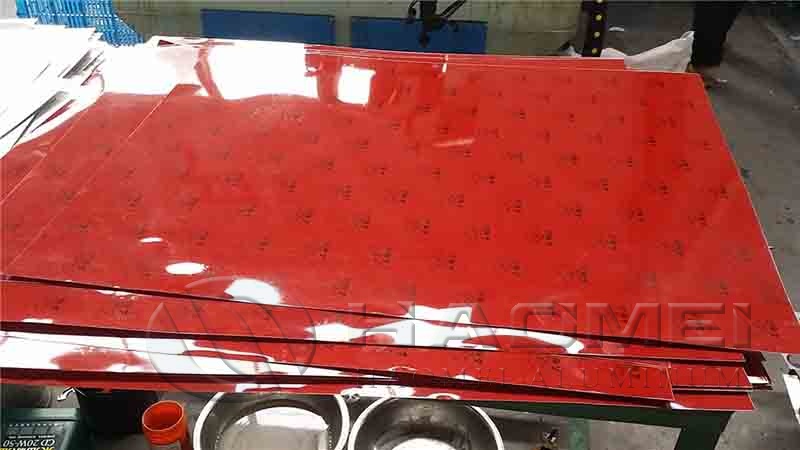
Sometimes, but not automatically. PP caps and ROPP caps may look similar, yet their forming processes are different. ROPP caps are rolled onto the bottle neck, so the skirt, thread area, and tamper-evident bridge must deform predictably. PP caps also require accurate perforation, sealing liner compatibility, and strong side-wall performance.
The same coloured aluminium coil may work for both if the thickness, temper, coating flexibility, and lubrication condition match both tooling sets. However, a sheet optimized for short caps may crack on taller caps. A stiffer temper may give a sharp appearance but could increase split risk during rolling or knurling.
For mixed production, ask the supplier for mechanical property ranges, not only nominal values. Tensile strength, elongation, yield strength, and earing performance should be consistent from coil to coil. If the cap plant uses high-speed equipment, coil flatness and coating curing stability become even more important.
Thickness depends on the closure design. Too thin, and the cap may deform, lose torque performance, or feel weak. Too thick, and forming load increases, tooling wear rises, and the cap may not roll properly onto the bottle.
| Closure type | Common thickness range | Selection comment |
|---|---|---|
| Wine and spirits ROPP caps | 0.18 mm to 0.23 mm | 0.20 mm or 0.21 mm is common for many closures |
| Beverage and water PP caps | 0.20 mm to 0.25 mm | Depends on diameter, bridge design, and liner system |
| Pharmaceutical aluminium caps | 0.18 mm to 0.22 mm | Requires very clean surface and stable lacquer |
| Decorative screw caps | 0.20 mm to 0.30 mm | Taller caps may need better elongation rather than only more thickness |
Besides nominal thickness, tolerance matters. A cap line may run well at 0.21 mm, but if the real coil varies too much, forming pressure and sealing performance can shift. Many cap producers request tight thickness tolerance, controlled width tolerance, proper coil ID such as 508 mm, and burr-free slit edges.
Colour failure usually comes from a mismatch between coating performance and forming stress. The metal may be acceptable, but the paint or ink layer may be too hard, too thick, under-cured, over-cured, or incompatible with the lubricant used on the cap line.
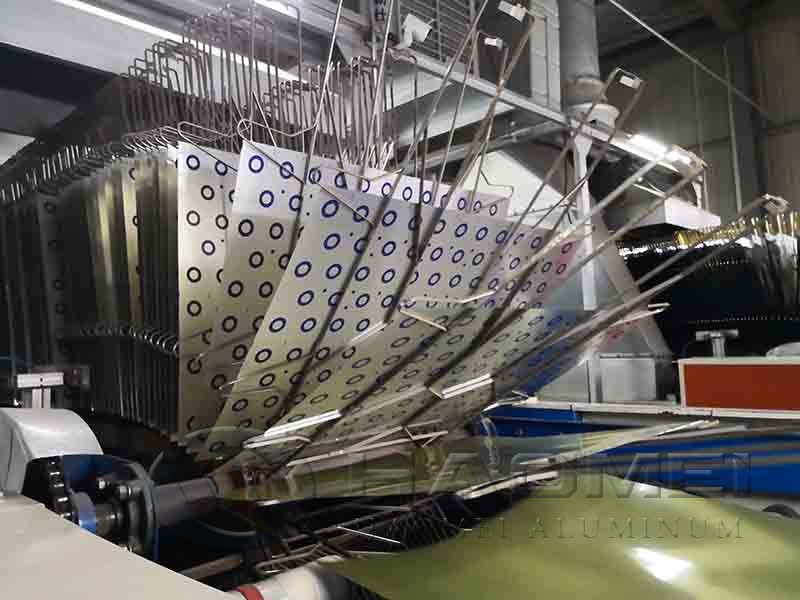
A reliable coloured aluminium sheet should pass forming-related tests, not just flat-panel inspection. For printed closures, the artwork also needs registration stability, scratch resistance, and varnish protection. If the cap has heavy embossing or deep side-wall drawing, the coating system should be designed for that forming level from the start. Pre-tested Printed Aluminum materials can help reduce trial loss when brand graphics and closure forming must be controlled together.
| Production problem | Likely cause | Specification action |
|---|---|---|
| Cracks around the skirt | Coating is too brittle or temper is too hard | Request forming-grade coating and verify temper |
| Peeling after drawing | Poor adhesion or surface pretreatment issue | Ask for adhesion test data after cupping or T-bend |
| Color difference between coils | Unstable paint batch or curing condition | Define acceptable color tolerance before ordering |
| Ink scratches during transport | Weak over-varnish or poor packing | Use protective varnish and coil packaging suitable for export |
| Poor cap appearance after knurling | Wrong thickness, low elongation, or coating mismatch | Run a small coil trial on the real cap line |
For first orders, the purchase specification should include alloy, temper, thickness, width, coating color, inner and outer lacquer requirements, printing pattern if any, coil weight, coil ID, mechanical properties, packing method, and sample approval rules. The most useful sample is not only a flat sheet sample, but a trial coil that can be formed into actual caps under normal production speed.
Tags: Coloured Aluminium Sheet | Aluminum Bottle Cap Material | Printed Aluminum Closure Sheet |
Original Source: https://www.alclosuresheet.com/a/coloured-aluminium-sheet.html

+86-15978414719


+86-15978414719


sale@alumhm.com