


2026-09-09
Aluminum closure sheet is the forming stock used for ROPP, PP, screw-cap, pilfer-proof, cosmetic, pharmaceutical, and beverage closures. For converters, the highest-risk issue is not nominal alloy selection; it is consistent forming performance after coating and printing. A sheet that appears acceptable on delivery can still create skirt cracking, earing, color variation, or poor liner adhesion during cap production.
Start with the cap drawing, tooling configuration, and decorating route. Do not specify only thickness and width. The purchase specification should connect metal properties to deep drawing, knurling, threading, coating, and end-use conditions.
| Closure requirement | Material specification to control | Practical acceptance point |
|---|---|---|
| Deep drawing and skirt formation | Alloy, temper, elongation, earing | Trial-form cups and inspect for cracks and uneven skirt height |
| Thread and pilfer-band definition | Thickness consistency, tensile strength | Verify thread profile after rolling and bridge integrity |
| Printing appearance | Surface cleanliness, coating wetting, color control | Review coated-panel adhesion and approved color standard |
| Acidic or alcoholic contents | Internal lacquer suitability | Obtain coating declaration and migration documentation |
| High-speed conversion | Coil flatness, edge condition, coil build | Confirm feeder performance, burr level, telescoping limits |
Common closure alloys include 8011, 3105, 3004, 1050, and 1060, but alloy selection is application-specific. 8011 is widely used where balanced strength and formability are needed. Lower-strength 1xxx-series material can suit certain simple caps, while 3xxx-series grades may be selected where higher strength is necessary. Temper must be agreed with the cap geometry; H14, H16, and H18 are common commercial designations, but equivalent mechanical-property ranges should be written into the order.
For standard ROPP closures, thickness frequently falls around 0.20 mm to 0.28 mm. This is a market practice range, not a universal rule. Larger diameters, deep skirts, embossing, and demanding pilfer-band designs may require different gauges. Require thickness measurement at the agreed transverse positions and report the method, such as micrometer measurement to ASTM B666/B666M principles where applicable.
Use Plain Aluminum when the converting line applies its own base coat, color coat, varnish, or print system. This option provides coating flexibility, but surface cleanliness and lubricant control become critical. Painted stock lowers decorating steps and can improve throughput, provided the coating is proven for forming and the intended product contact environment.
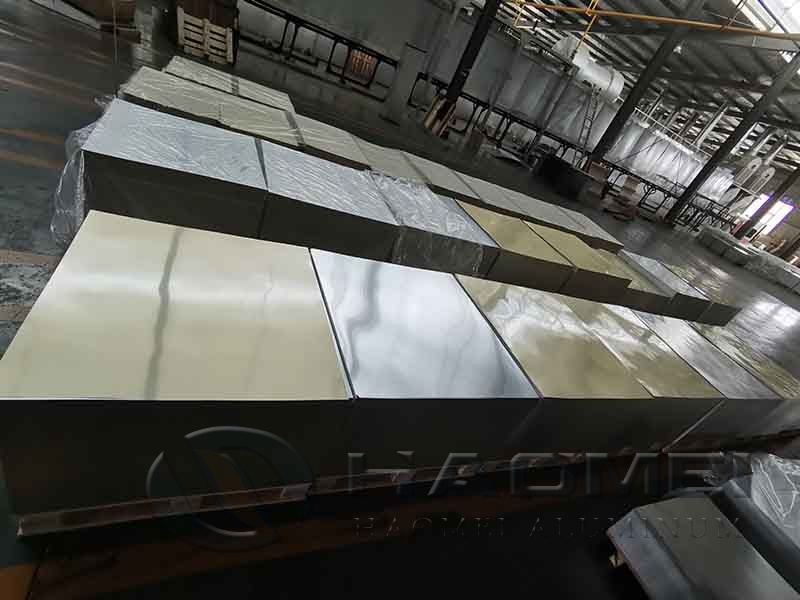
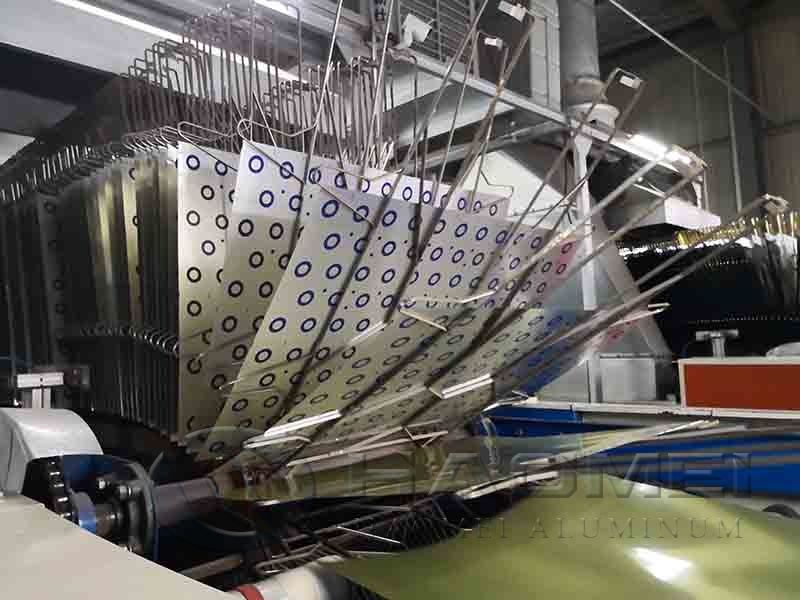
The manufacturing route generally includes casting, hot rolling, cold rolling, annealing or temper processing, slitting, cleaning, and, where required, coating and printing. Each stage can affect closure performance. Variations in rolling texture may influence earing. Poorly controlled slitting can create burrs that interfere with feeding. Residual rolling oil can reduce coating adhesion.
For coated or printed coils, confirm the complete stack rather than requesting a generic "food-grade" statement. Identify the pretreatment, primer, color coat, overvarnish, and internal lacquer separately. Ask whether the coating is intended for external decoration, internal product contact, or both. These functions are not interchangeable.
| Supply format | Benefits | Main control point | Suitable use |
|---|---|---|---|
| Plain coil | Maximum decorating flexibility | Surface tension, oil residue, edge quality | In-house coating and printing |
| Painted coil | Shorter downstream process | Coating weight, cure, forming adhesion | Solid-color beverage and spirits caps |
| Printed coil | Brand decoration applied upstream | Color match, registration, scuff resistance | High-volume branded closures |
| Cut sheet | Easier handling for selected presses | Sheet squareness, flatness, stacking | Sheet-fed blanking operations |
Incoming inspection should include coil ID traceability, alloy and temper certificate, thickness and width checks, edge inspection, flatness review, coil dimensions, and visual checks for scratches, oil marks, coating voids, and color inconsistency. For painted material, conduct cross-hatch adhesion testing using an agreed method, such as ASTM D3359 where relevant, after forming trials rather than only on flat panels. Flat-panel adhesion alone does not prove performance through drawing and knurling.
Aluminum closure material pricing normally has three components: an aluminum reference price, conversion premium, and value-added charges. The metal reference may be indexed to the London Metal Exchange cash or settlement basis, depending on the contract. Conversion covers rolling, annealing, slitting, packaging, quality control, and yield loss. Coating, printing, special widths, narrow slits, protective films, and short production campaigns add further cost.
Use a transparent quotation formula instead of comparing only a delivered price:
Material price = aluminum index + conversion premium + coating/printing charge + freight + duties/taxes, where applicable
Ask suppliers to state the index month, currency, premium validity period, minimum order requirement, scrap/yield assumptions, Incoterms, and payment terms. This prevents apparent price differences caused by different metal-price dates or omitted freight. For printed products, include cylinder or plate costs, artwork approval responsibility, and acceptable color tolerance before production.
Supply risk is often concentrated in coating chemistry, qualified packaging, and narrow-width slitting capacity rather than primary aluminum availability. Maintain approved alternatives for alloy-temper combinations, but do not change lacquer systems without validation. A substitution can alter migration performance, sterilization resistance, and liner compatibility.
For food-contact applications in the European Union, Regulation (EC) No 1935/2004 establishes the general framework for materials intended to contact food, while Regulation (EC) No 2023/2006 addresses good manufacturing practice. In the United States, coating compliance may be assessed against applicable FDA food-contact provisions, including 21 CFR 175.300 for resinous and polymeric coatings when relevant. These references do not replace a product-specific compliance review. Obtain declarations of compliance, supporting migration information where required, and confirmation of intended conditions of use, including food type, contact time, temperature, and sterilization exposure.
Market cycles follow aluminum exchange prices, regional premiums, energy costs, freight availability, and demand from beverage, spirits, pharmaceuticals, and cosmetics. Reduce volatility by separating metal-index exposure from conversion negotiations, agreeing a defined pricing window, and scheduling releases against verified consumption. Before each campaign, approve a retained sample for color, gloss, coating adhesion, and formed-cap appearance, then lock those criteria into the production specification.
Tags: Aluminum Closure Sheet | ROPP Cap Material |
Original Source: https://www.alclosuresheet.com/a/aluminum-closure-sheet.html

+86-15978414719


+86-15978414719


sale@alumhm.com