

2026-03-11
In the packaging industry, aluminum bottle caps are widely used in wine, beverages, cosmetics, and pharmaceuticals due to their advantages of being lightweight, airtight, environmentally friendly, and possessing anti-counterfeiting properties. The quality, processing efficiency, and appearance of the bottle caps largely depend on the choice of aluminum sheet used.
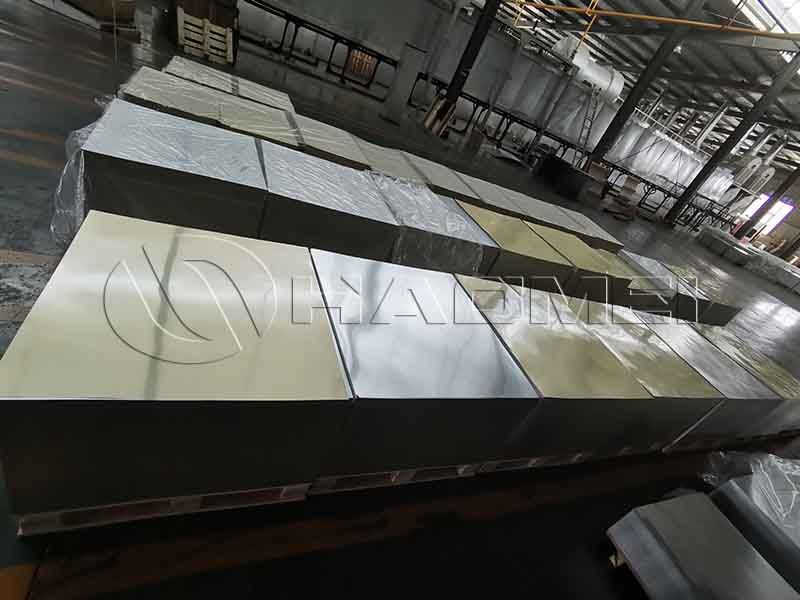
Unlike ordinary industrial aluminum sheets, the aluminium sheet for bottle caps must balance "processability" and "structural stability." They must be able to smoothly complete stamping, bending, and screw-sealing processes while ensuring no springback or breakage after forming, and also adapt to the appearance and protection requirements of different scenarios.
The thickness of the aluminum sheet used for bottle caps is not a fixed value. It depends on the type of bottle cap, processing technology, and the characteristics of the contents. The industry standard thickness range is between 0.15-0.5mm. Different scenarios correspond to different optimal thickness ranges. Blindly choosing excessively thick or thin sheets will affect production and usage results.
1. Thin thickness (0.15-0.27mm): Primarily lightweight and easy to form, suitable for deep-draw screw-on tamper-evident caps (ROPP caps), pharmaceutical bottle caps, and small cosmetic bottle caps. These caps do not require excessive strength; thin aluminum sheets can be easily deep-drawn, reducing raw material costs while ensuring good sealing performance.
Among them, 0.15-0.2mm thickness is mostly used for pharmaceutical bottle caps and small cosmetic caps, while 0.2-0.27mm is more suitable for ROPP bottle caps for alcoholic beverages, balancing formability and basic rigidity to prevent breakage during screw-on sealing.
2. Medium thickness (0.28-0.35mm): Offers balanced overall performance and is the most widely used thickness range, suitable for regular alcoholic beverage bottle caps, beverage bottle caps (carbonated/non-carbonated), and medium to large cosmetic bottle caps. This thickness of aluminum sheet falls between aluminum foil and regular thin sheet, retaining good stamping formability while possessing sufficient strength to withstand minor bumps during transportation. It is also compatible with most bottle cap screw-sealing and pressing processes, balancing sealing performance and durability, making it the most cost-effective choice.
3. Thick thickness (0.36-0.5mm): Emphasizing high strength and wear resistance, suitable for large bottle caps, heavy-duty bottle caps, or scenarios with high protection requirements, such as large-capacity wine bottle caps and industrial reagent bottle caps. Thicker aluminum sheets are more rigid and less prone to deformation after forming, effectively improving the anti-theft and durability of the bottle cap. However, the processing difficulty is slightly increased, and the raw material cost is relatively higher. Careful selection based on actual needs is necessary to avoid cost waste.
Additional Reminder: When choosing the thickness, it is necessary to match the alloy grade of the bottle cap (e.g., 8011, 3105, 5052, etc.). Different alloys have different strengths, and the forming effect will vary even at the same thickness. It is recommended to consider the subsequent conditions before making a comprehensive selection.
The temper of aluminium sheet for closures essentially refers to its work hardening degree and annealing state, directly affecting its stamping formability, strength, and springback. The industry commonly uses the H series (work hardened state), while the O temper (annealed state) is used in some applications. The key is to select the temper based on the processing technology to avoid problems such as forming cracks and excessive springback.
1. O Temperament (Annealed State): It offers the best plasticity and the lowest hardness, suitable for complex forming processes, such as irregularly shaped bottle caps requiring multiple stampings and bending, and decorative bottle caps with patterns. O-temper aluminum sheets have excellent ductility, easily adapting to complex forming processes.
They are less prone to cracking and wrinkling after forming, but have lower strength, requiring subsequent treatment to improve rigidity. They are often used for cosmetic bottle caps with high aesthetic requirements and complex processing, and high-end wine bottle caps. They are not suitable for anti-theft bottle caps with high strength requirements.
2. H14 Temperament: It has the best overall performance, and is the mainstream choice for aluminum sheet used in bottle caps. H14 temper aluminum sheets combine strength and ductility, with moderate hardness. They can smoothly complete conventional processes such as stamping and screw sealing, and maintain good shape stability after forming, without springback or breakage. They are suitable for most common bottle caps (wine, beverage, and cosmetic caps), especially suitable for commonly used alloys such as 8011 and 3105, making it the most cost-effective temper choice.
3. H16 and H18 tempers: These are fully hardened tempers with high strength and hardness, suitable for applications requiring extremely high rigidity and anti-theft properties, such as high-strength anti-theft bottle caps and heavy-duty bottle caps. These tempers are slightly more difficult to form, requiring more specialized stamping equipment to avoid cracking during forming. They are mostly used for industrial reagent bottle caps and high-end anti-theft wine bottle caps. Regular consumer bottle caps do not need to choose this high-hardness temper, as it would increase processing costs and difficulty.
Tips: If unsure which hardness setting to choose, prioritize H14, as it's compatible with most bottle cap processing techniques. For complex processing, choose O; for emphasizing strength, choose H16 or H18. Note that the hardness setting must match the thickness; thin aluminum sheets are not recommended for excessively hard settings, as they are prone to breakage.
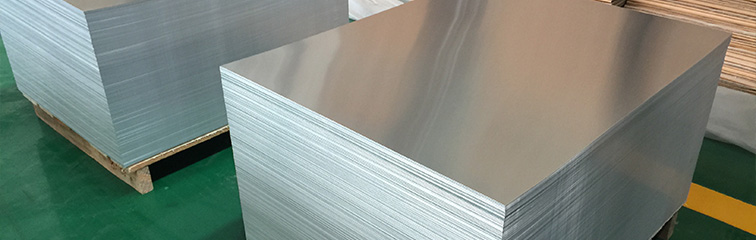
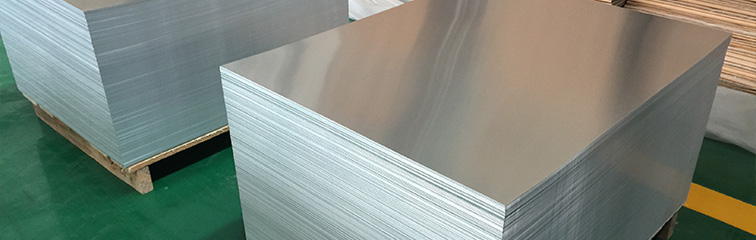
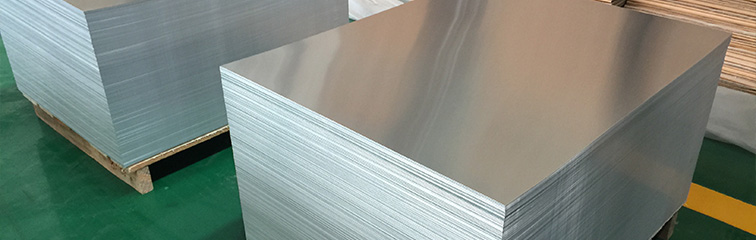
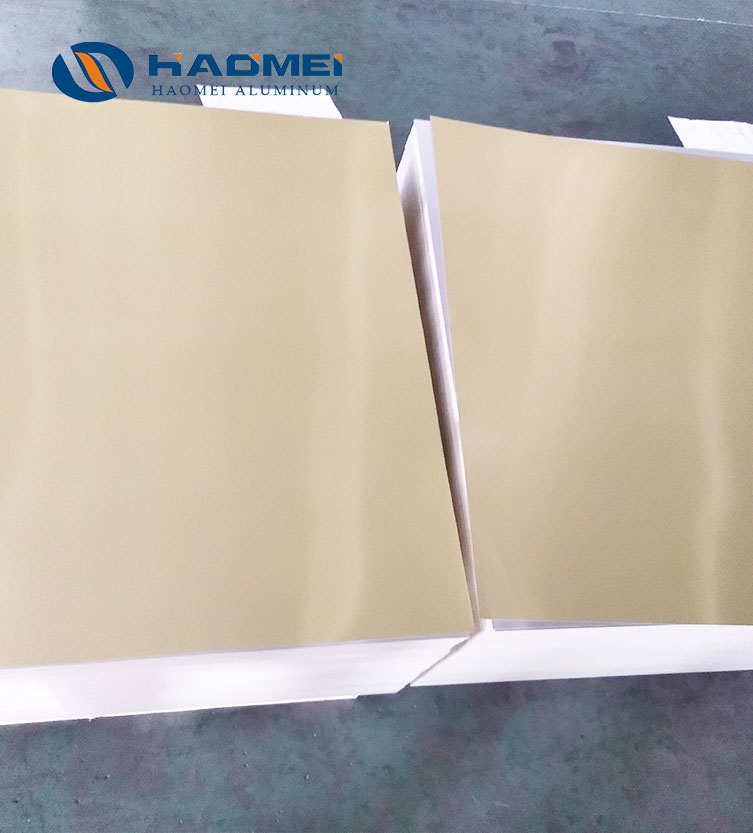
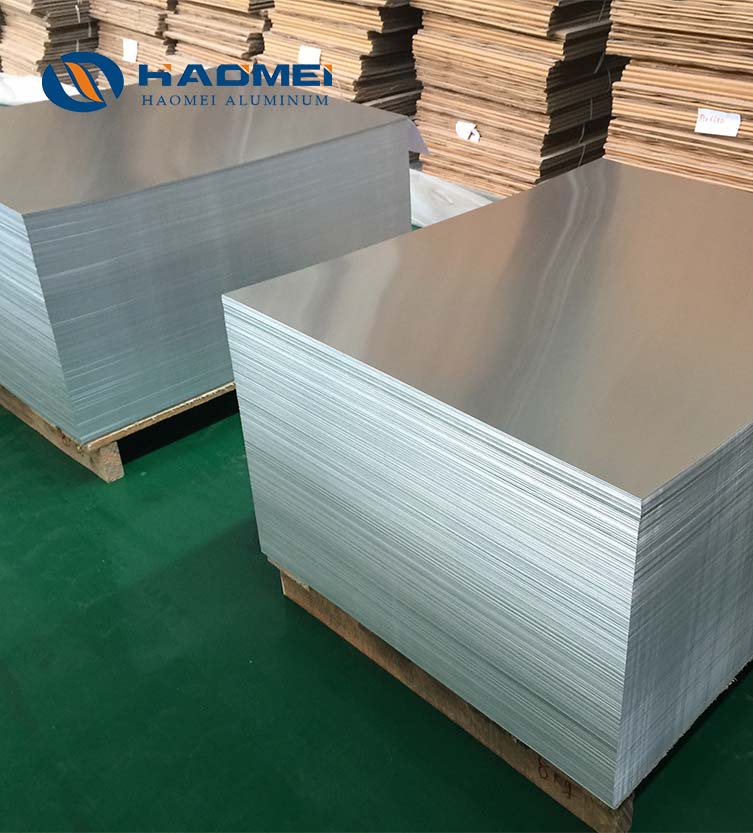
Plain aluminum sheet refers to the original aluminum bottle cap material without any additional coating or printing. It has a smooth surface, metallic luster, and a simple, elegant look. This is the most basic and commonly used surface treatment.
Its advantages include easy processing; it can be directly stamped and formed, and logos and text can be easily printed later, resulting in the lowest cost. Furthermore, the lack of a coating prevents paint peeling and powdering issues, making it suitable for food, pharmaceutical, and other safety-critical applications (meeting food-grade and pharmaceutical-grade standards).
Applicable Scenarios: Ordinary beverage bottle caps, pharmaceutical bottle caps, mid-to-low-end wine bottle caps, and scenarios where appearance requirements are not high and cost control is a priority. When selecting aluminum sheets, ensure the surface is free of cracks, bubbles, and oil spots to guarantee optimal printing and forming results. High-quality aluminum sheets also require degreasing treatment to remove excess oil and reduce jamming during stamping.
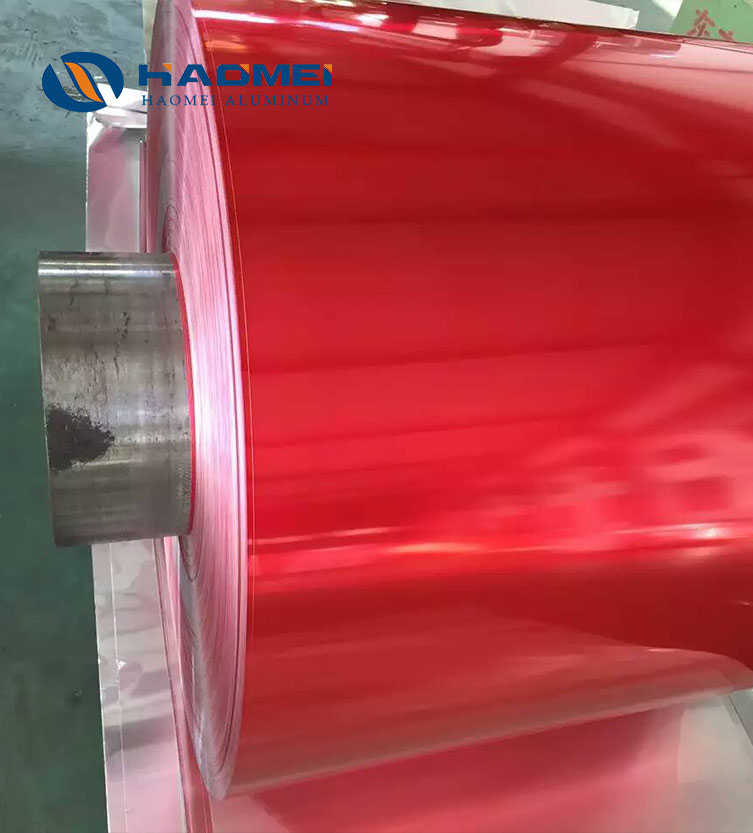
Color-coated aluminum sheets are produced by applying a colored coating (commonly polyester PE or fluorocarbon PVDF) to the surface of a bare aluminum sheet through cleaning, chromating, roller coating, and baking. This coating provides both decorative and protective properties. Its core advantages are vibrant and long-lasting colors, customizable to any product positioning (compatible with RAL and Pantone color charts).
The coating effectively isolates air and moisture, enhancing the aluminum sheet's corrosion resistance and preventing oxidation and discoloration. Furthermore, the high coating hardness (greater than 2H) makes it impact-resistant and resistant to paint peeling, making it suitable for bottle caps stored outdoors or used for extended periods.
Applicable Scenarios: High-end wine bottle caps, cosmetic bottle caps, brand-customized bottle caps, especially in scenarios where color differentiation is needed to enhance brand recognition. Polyester (PE) coating is suitable for indoor or conventional storage environments, offering vibrant colors and moderate cost. Fluorocarbon (PVDF) coating is UV resistant and withstands harsh environments, making it suitable for outdoor storage or high-end products, with a lifespan of up to 30 years without fading, but at a relatively higher price.
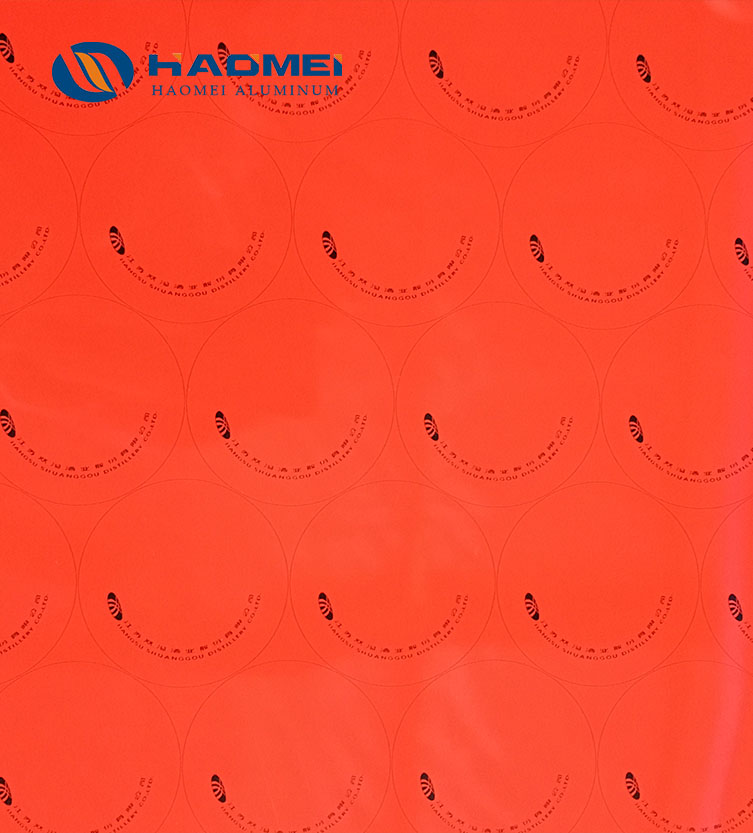
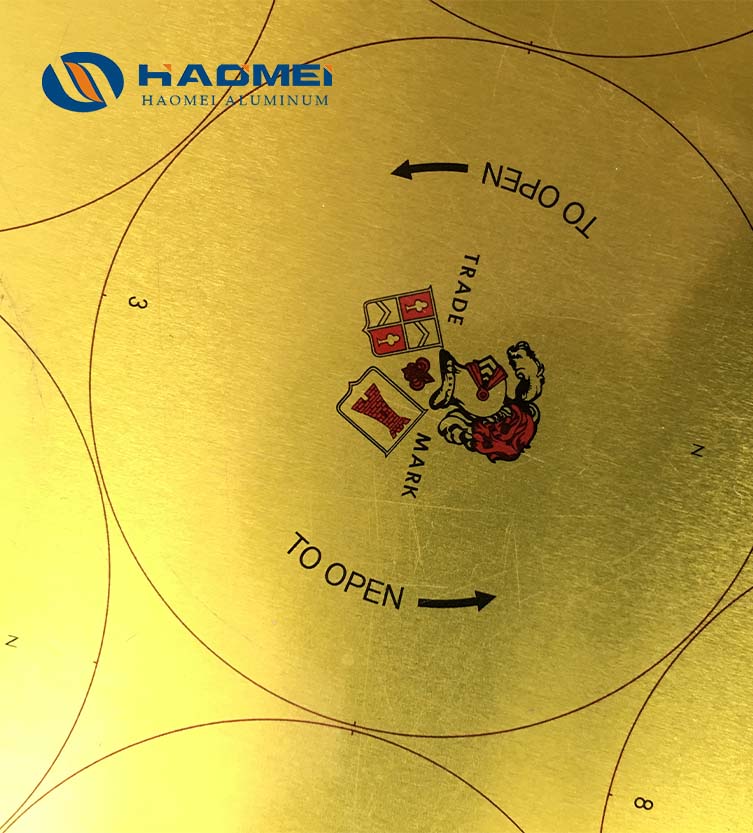
Color-printed aluminum plates are made by printing logos, patterns, and text onto the surface of plain or color-coated aluminum plates using methods such as screen printing and digital printing. They offer stronger decorative appeal than color-coated aluminum plates, enabling more complex pattern designs and highlighting the product's customization advantages.
Their advantages include clear patterns, rich details, and the ability to achieve personalized customization, effectively enhancing the grade and recognizability of bottle caps. Furthermore, the printed layer undergoes a curing process, making it less prone to peeling or fading, suitable for scenarios with high requirements for appearance design.
Applicable Scenarios: It is used to make high-end cosmetic bottle caps, gift bottle caps, and brand-customized wine bottle caps, such as those printed with brand logos, product patterns, and anti-counterfeiting labels. When selecting printing ink, it is important to ensure that the printed layer adheres tightly to the aluminum plate to prevent ink loss or cracking during stamping. Additionally, food-grade printing ink should be chosen to suit scenarios where food, cosmetics, or other products come into direct contact with the contents, ensuring safety.
Tags: aluminum bottle cap material |
Original Source: https://www.alclosuresheet.com/a/aluminium-sheet-for-bottle-cap.html
Product
Aluminium Foil Sealing
Printed Aluminum
Painted aluminum
Coated Aluminum Strip
Alloy
1060
8011
3105
3104
Application
Cosmetic cap
Carbonated beverage cap
Beverage cap
Easy-tear lid

+86-15978414719


+86-15978414719


sale@alumhm.com