


2026-08-26
Roll-on pilfer-proof, or ROPP, closures are widely used for wine, spirits, olive oil, syrups, and pharmaceutical bottles. Because the cap is deep-drawn, threaded, and sometimes embossed at high speed, the aluminum coil must do more than look attractive. It must form evenly, accept coatings, and maintain dependable performance on the capping line.
The following questions reflect recurring English-language search and Q&A discussions around aluminum bottle cap material. The answers focus on practical specification points that new bottle-closure projects often miss.
| ROPP cap requirement | Aluminum coil property to review | Typical production risk if ignored |
|---|---|---|
| Deep drawing | Alloy chemistry and temper | Cracks, wrinkles, or uneven cap walls |
| Thread rolling | Consistent mechanical properties | Poor thread definition or torque variation |
| Decoration | Surface cleanliness and coating adhesion | Print defects, pinholes, or peeling |
| Food-contact use | Approved internal lacquer system | Product interaction or corrosion |
| High-speed conversion | Stable thickness and flatness | Scrap, tool wear, and line interruptions |
For many ROPP closure applications, 8011 aluminum is the established choice because it combines good drawability with adequate strength after forming. It is commonly supplied in H14 or H16 temper for cap-shell conversion. Its forming behavior is especially suitable for closures that require a deep skirt, rolled threads, and a tamper-evident band.
3105 aluminum can also be considered for particular closure designs, especially where a slightly different strength profile is needed. However, alloy selection should not be based on a grade number alone. The cap diameter, skirt depth, thread geometry, embossing pattern, and tooling condition all affect the result.
For a standard wine or spirits closure, 8011 often provides the safest starting point. For customized closures, request trial material that matches the actual conversion route. A reliable order specification should state alloy, temper, thickness tolerance, width tolerance, coating requirement, and final cap application.
When a project needs uncoated stock for later finishing, Plain Aluminum can be specified with a clean rolling surface suitable for subsequent lacquering, printing, or embossing.
H14 is often selected for ROPP caps because it offers a balanced level of softness and rigidity. The material must flow into the cap shell without splitting, while still retaining enough strength for thread rolling and handling after conversion. H16 may be used when the closure design benefits from slightly higher hardness, but it can reduce the forming margin for deeper shells.
Temper is not simply a hardness preference. If the aluminum is too soft, cap walls may deform during threading or sealing. If it is too hard, the material can crack around the skirt, shoulder, or tamper band during drawing.
A converter should evaluate temper together with the following factors:
Cap diameter and finished skirt length.
Number of draw stages in the press.
Thread profile and knurling design.
Internal liner or seal type.
Capping torque and bottle-neck finish.
| Common cap situation | Frequently considered temper | Reason |
|---|---|---|
| Standard wine ROPP closure | H14 | Good balance for drawing and thread rolling |
| Shorter spirits closure | H14 or H16 | Depends on decoration and shell geometry |
| Deep-drawn premium closure | H14 | Better forming allowance is often preferred |
| Highly embossed shell | Project-specific testing | Embossing depth can change stress distribution |
Many 28 mm ROPP cap programs use aluminum thicknesses around 0.20 mm to 0.23 mm, although the correct range depends on cap height, neck finish, liner design, and the converter's tooling. Taller closures or designs with deeper embossing may require a different thickness to maintain cap stiffness and avoid distortion.
Thickness consistency matters as much as nominal thickness. A coil with excessive variation can create changes in draw depth, thread quality, torque behavior, and cap weight. Material should therefore be ordered with a defined thickness tolerance rather than a nominal value only.
Before approving stock, compare the coil specification with the finished closure drawing. The drawing should identify shell height, tamper-band construction, thread position, bead dimensions, and any decorative relief. This helps prevent a common problem: selecting a thinner material based only on cost, then encountering tearing or weak threads in production.
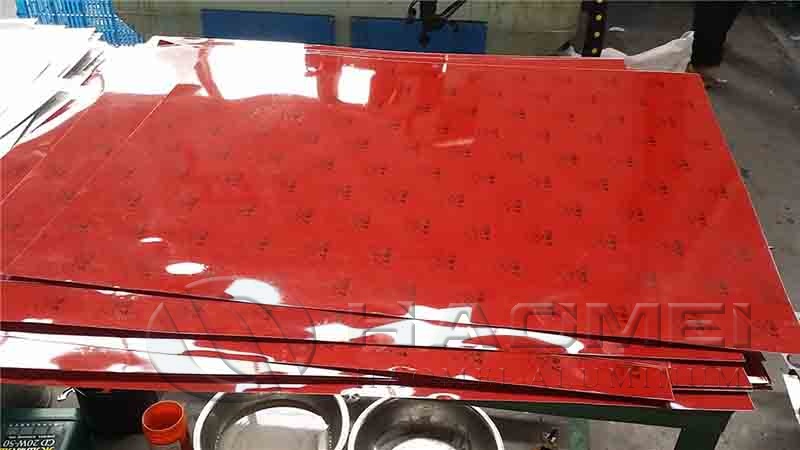
Yes. Pre-coated and pre-printed aluminum coil is widely used for branded ROPP closures. This route can improve color consistency and reduce downstream decoration steps, but the coating system must tolerate deep drawing, thread rolling, and contact with closure-conversion lubricants.
The external side may use a basecoat, color coat, clear varnish, or printed design. The internal side normally needs a food-contact lacquer selected for the bottled product. Wine, acidic beverages, spirits, edible oils, and pharmaceutical liquids can require different barrier performance.
Ask for coating data covering adhesion, cure level, scratch resistance, and forming performance. A visually appealing printed coil is not automatically suitable for cap conversion. If the coating is too brittle, it may show whitening, micro-cracks, or loss of gloss around threads and beads.
For projects requiring later decoration flexibility, Plain Aluminum allows converters to apply their own printing and lacquer systems after slitting or blanking.
Cracking and earing are usually material-process interaction issues rather than one isolated fault. Cracks often appear when the aluminum temper is too hard for the draw ratio, the coil has limited elongation, or the tooling creates excessive localized stress. Earing, the uneven wave-like rim formed after drawing, is linked to directional properties in the rolled sheet.
The first checks should include coil orientation, mechanical-property consistency, lubricant condition, punch-and-die clearance, and draw depth. Coating thickness can also contribute, particularly when a heavily coated sheet is formed into a tight thread profile.
A practical troubleshooting sequence is to compare defective caps with acceptable caps from the same press, then review coil batch data for thickness, temper, tensile strength, elongation, and surface condition. If defects occur only in one decoration color or lacquer type, examine coating flexibility before changing the base aluminum specification.
For a new ROPP closure program, provide the cap drawing, bottle-neck standard, intended product, finish requirement, and conversion method when requesting aluminum coil samples. Those details make it possible to match the material to the actual forming conditions rather than relying on a generic cap-stock description.
Tags: Aluminum coil for ROPP caps | ROPP cap material | aluminum closure sheet | 8011 aluminum coil | bottle cap stock |
Original Source: https://www.alclosuresheet.com/a/aluminum-coil-for-ropp-caps.html

+86-15978414719


+86-15978414719


sale@alumhm.com